
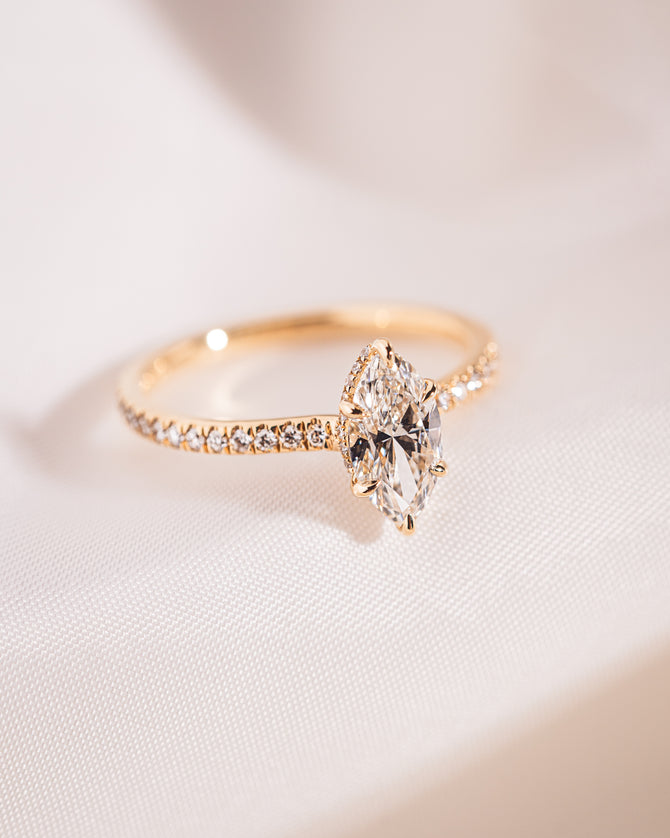
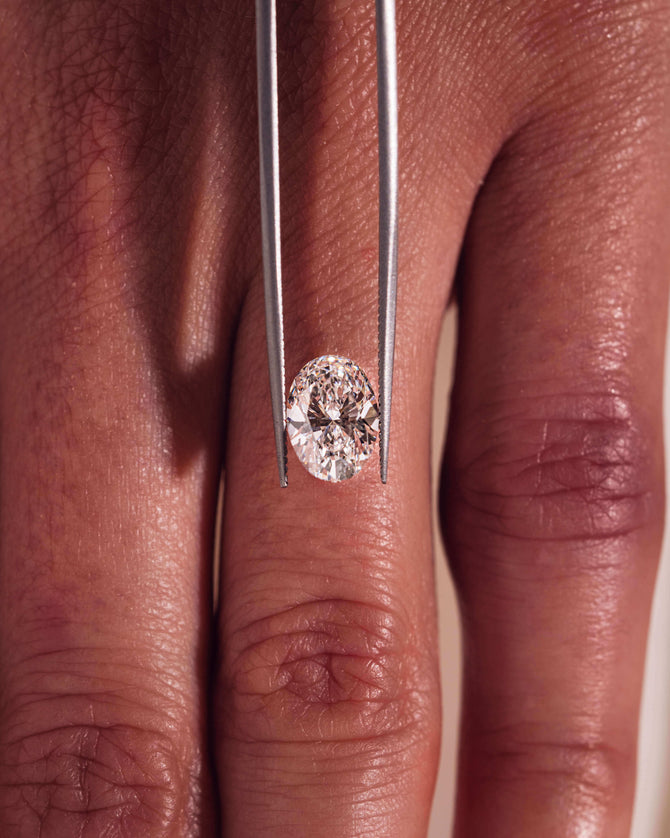

Two rectangular diamonds can look surprisingly different once they're on your hand. A radiant cut catches your eye with lots of smaller flashes; an emerald cut draws you into broader reflections and long, open facets. If you're choosing an engagement ring, that difference may matter more to you than you expected when you first saved pictures of the shapes you liked.
When comparing radiant vs emerald cut lab diamonds, you may find yourself drawn to the sparkle of one and the outline of the other. Looking at real stones helps you work out which details you love most. The way the light moves, the proportions on your hand and the setting around the diamond all have a part to play in that choice.
Radiant and Emerald Cuts Compared
Both cuts can have a rectangular shape and cropped corners, but their facet patterns create different effects. A lab-grown diamond has essentially the same optical and physical properties as a mined diamond, so the same cut principles apply.
|
What you notice |
Radiant cut |
Emerald cut |
|---|---|---|
|
Light effect |
Many smaller, lively flashes |
Broad, orderly flashes with a hall-of-mirrors look |
|
Facets |
Mixed cutting style with brilliant-style pavilion facets |
Long, parallel step facets |
|
Clarity appearance |
Busy sparkle can make some inclusions less noticeable |
Open facets can make inclusions easier to see |
|
What draws the eye |
Smaller flashes across the stone |
Large facets and long lines |
These differences are easiest to appreciate when you see the diamonds move. Two radiants, or two emerald cuts, can still look quite different because of their proportions and faceting. Look at the actual stones you're considering and give yourself time to notice which one keeps catching your eye.

How Radiant and Emerald Cuts Reflect Light
A radiant cut combines a square or rectangular outline with brilliant-style facets that break the light into many smaller flashes. Some have the closely scattered sparkle often described as a crushed-ice look. If that lively shimmer is what you love in a diamond, try a few radiants and see how their light patterns compare as you turn them.
An emerald cut has long step facets that create broad reflections, often called a hall-of-mirrors effect. You can follow the bands of light as the diamond moves. In a simple solitaire, those facets and the shape of the stone are easy to appreciate without extra details around them. You may find that this is the part of the ring you keep looking at.
View both shapes in daylight and ordinary indoor lighting, as well as under brighter showroom lights. A still photograph captures only one moment; a video or an in-person comparison gives you a better sense of the sparkle. Tilt each stone slowly and look for a light pattern you enjoy, including how the bright and dark areas change as it moves.
Clarity and Colour in the Diamond You Choose
The emerald cut’s open table and long facets offer a clear view into the diamond. They can also make an inclusion or body colour easier to notice. Give an emerald-cut stone a close look in normal lighting and ask whether it appears clean to your eye. Pay attention to anything directly under the table, where you may see it most readily.
A radiant's busier reflections can make some inclusions less noticeable, but colour is a separate consideration. Its faceting can make colour appear lighter or darker when viewed from above, so don't assume every radiant will hide a tint. Compare the actual stones in similar lighting and use the grading reports to understand the differences you see.
Decide what looks clean and appealing to you at a normal viewing distance, then discuss the grades and price with us. A small feature that needs magnification to see may matter less to you than the shape or sparkle. If you can easily see a mark and find it distracting, keep looking at other stones within your budget.

Compare Size, Proportions and Settings
Radiant cuts can be square or rectangular, while emerald cuts are often chosen for their elongated shape. Length-to-width ratio makes a difference even when you're comparing two rectangular stones. A longer outline looks more slender; a squarer radiant gives a different balance on the hand. Look at measurements in millimetres alongside carat weight so you can compare the visible size of each diamond.
When you have a few favourites, compare them this way:
-
Place stones of a similar face-up size side by side, ideally in the same setting style.
-
Look at each from the top and at an angle, both still and in motion.
-
Check the centre for distracting inclusions, dark areas or reflections that do not appeal to you.
-
Notice how each outline works with the band width and any wedding band you plan to wear.
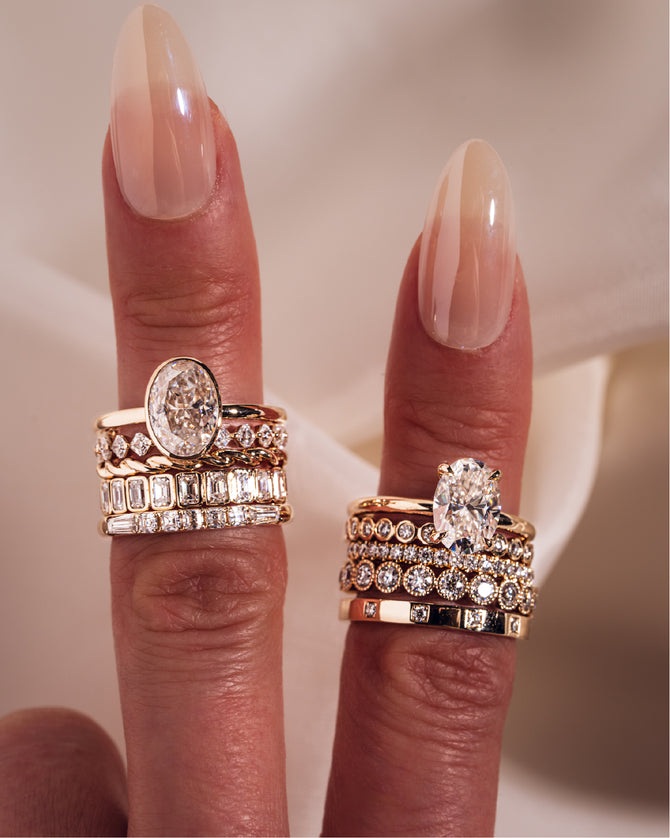
A simple solitaire leaves plenty of room to enjoy an emerald cut's long facets or a radiant's sparkle. Side stones, a halo or a wider band will change how either shape looks on your hand. Browse our emerald-cut engagement rings and radiant-cut engagement rings to see the settings you like. These collections include moissanite and lab-diamond designs, so select the lab-diamond option when comparing stones for your ring.
Find Your Lab-Diamond Ring at ZM Fine Jewelry
At ZM Fine Jewelry, we help you bring the diamond, setting and proportions together. We create lab-diamond engagement rings, wedding bands, fine jewellery and custom designs, with guidance throughout the choices that make a ring personal. If you love both radiant and emerald cuts, you can explore each without having to decide from photographs alone.
Bring us the styles you've saved and tell us what you like about them. We can discuss the sparkle, shape and visible size of the centre stone, then look at the metal, band and setting around it. A change in band width or stone proportions may help you understand why one ring feels better on your hand, even when both have the cut you first wanted.
Browse our lab-diamond engagement rings to see which designs appeal to you, or book a consultation for help comparing the options. We offer appointments in person, virtually and by phone. Whether you already have a favourite cut or are still deciding, we'll help you choose a ring you'll look forward to wearing every day.


